What actually happened, and when
Google's June 2026 spam update started June 24 and wrapped June 26. Two days. Global across all languages. Done.
This is the second spam update of 2026. The first ran in Q1. Two enforcements in six months is a faster cadence than prior years, which suggests Google's automated spam detection systems are running on tighter cycles.
The update targets general spam policy violations: thin content, manipulative redirects, cloaked pages, scaled auto-generated text published purely to game rankings. It doesn't touch link spam or site reputation abuse specifically. Google hasn't introduced any new policies alongside it — the existing spam framework is the benchmark.
Early reports from webmaster communities show organic traffic drops of 25% or more for affected sites. E-commerce stores are seeing inconsistent traffic and rankings fluctuations. Some of the June 24–25 shifts appear to be settling. Others look sticky.
The paid reflex that backfires
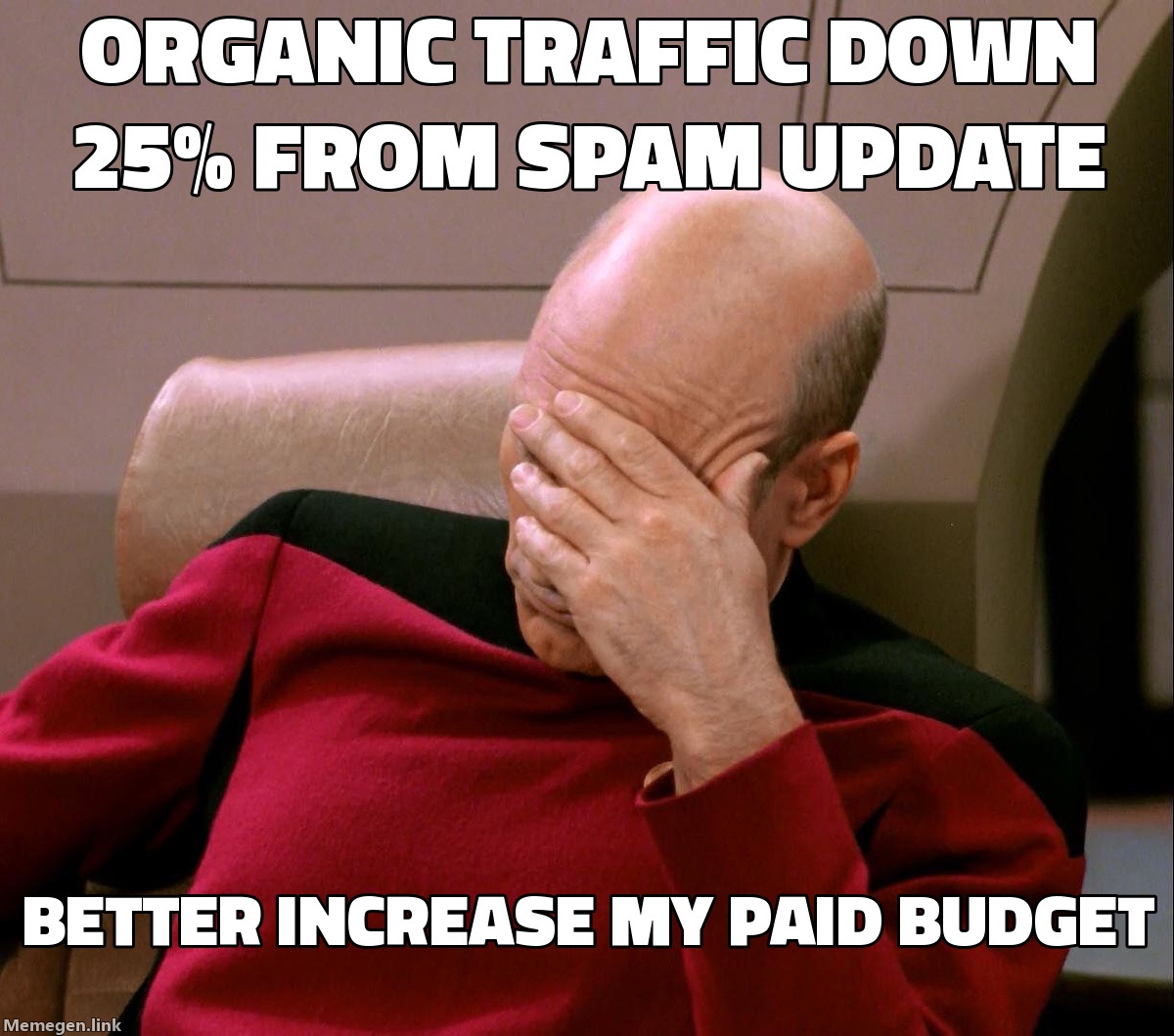
When organic traffic drops, the reflex is to increase paid search budgets to fill the gap. That logic breaks down when a spam update is the cause.
If your site took a hit, there's a content quality signal that triggered it. The pages that lost organic rankings are almost always the same landing pages your paid ads point to. When you drive more paid traffic to pages Google has flagged as low quality, Quality Score takes a hit. CPC rises. Conversion rate drops. You're paying more to get worse results from the same content.
Paid search can't replace organic traffic when the problem is page quality. Quality Score and organic ranking signals aren't identical, but they share inputs. Google's assessment of landing page quality feeds both systems. Adding budget to the auction doesn't change the underlying content signal.
You're funding the problem, not fixing it.
The window your competitors just opened
If your site wasn't affected, the next two weeks are worth watching closely.
When competitors lose organic rankings, their SERP real estate shrinks. Auctions on category-level queries become less crowded. Your current bid levels might deliver more volume without any budget increase — the same spend going further because there's less competition in the auction.
Check your auction insights over the next 14 days. If you're seeing impression share gains on non-branded category terms, that's likely competitors clearing out of organic, not a platform algorithm change. It won't last. Affected sites either recover organically over months or start compensating with paid, which drives CPMs up in the same auctions.
Four things to pull before you touch a bid
First: organic sessions June 24–26 vs. the same days the prior week, segmented by device. A drop above 10% without a seasonal or structural explanation is a flag worth investigating.
Second: landing page quality for your top paid traffic destinations. Thin content, excessive affiliate links, and scaled product descriptions all affect Quality Score evaluation in paid, not just organic ranking. If those pages have problems, your paid campaigns are already carrying the risk.
Third: branded query impression share. Spam updates can affect a domain's overall authority enough that branded organic visibility dips slightly. When branded organic weakens, branded CPC tends to rise as more of that demand shifts to paid.
Fourth: Quality Score trends on campaigns pointing to your highest-traffic pages. Quality Score typically slides before CPC moves — catching it early gives you a week or two to fix landing pages before the cost impact shows up.
Recovery from a spam penalty is slower than recovering from a core update. Core updates often self-correct as the ranking systems restabilize. Spam penalties require fixing the actual content, and Google says that reassessment takes months. Your paid campaigns will be carrying load on affected pages for a while.
What to do about it
If you got hit: stop the reflex to boost paid. Identify which specific pages lost ranking, audit them against Google's spam policy checklist, and fix the content. Paid to a penalized page hurts more than it helps.
If you weren't hit: run a quick scan for thin-content pages in your own account before you assume you're safe. Spam updates don't announce which sites they're watching.
The Gromerce audit tool checks your paid performance metrics alongside content and quality signals. If you want to see which landing pages are most exposed, it takes under three minutes at gromerce.com/audit.
Two spam updates in six months. This is the new baseline — not a one-off.
Sources: Search Engine Land, Search Engine Journal, SE Roundtable, June 2026