The numbers are uncomfortable
At Cannes Lions this week, the Harris Poll published research with the 4As and Infillion that landed uncomfortably in an industry trying hard to believe the opposite.
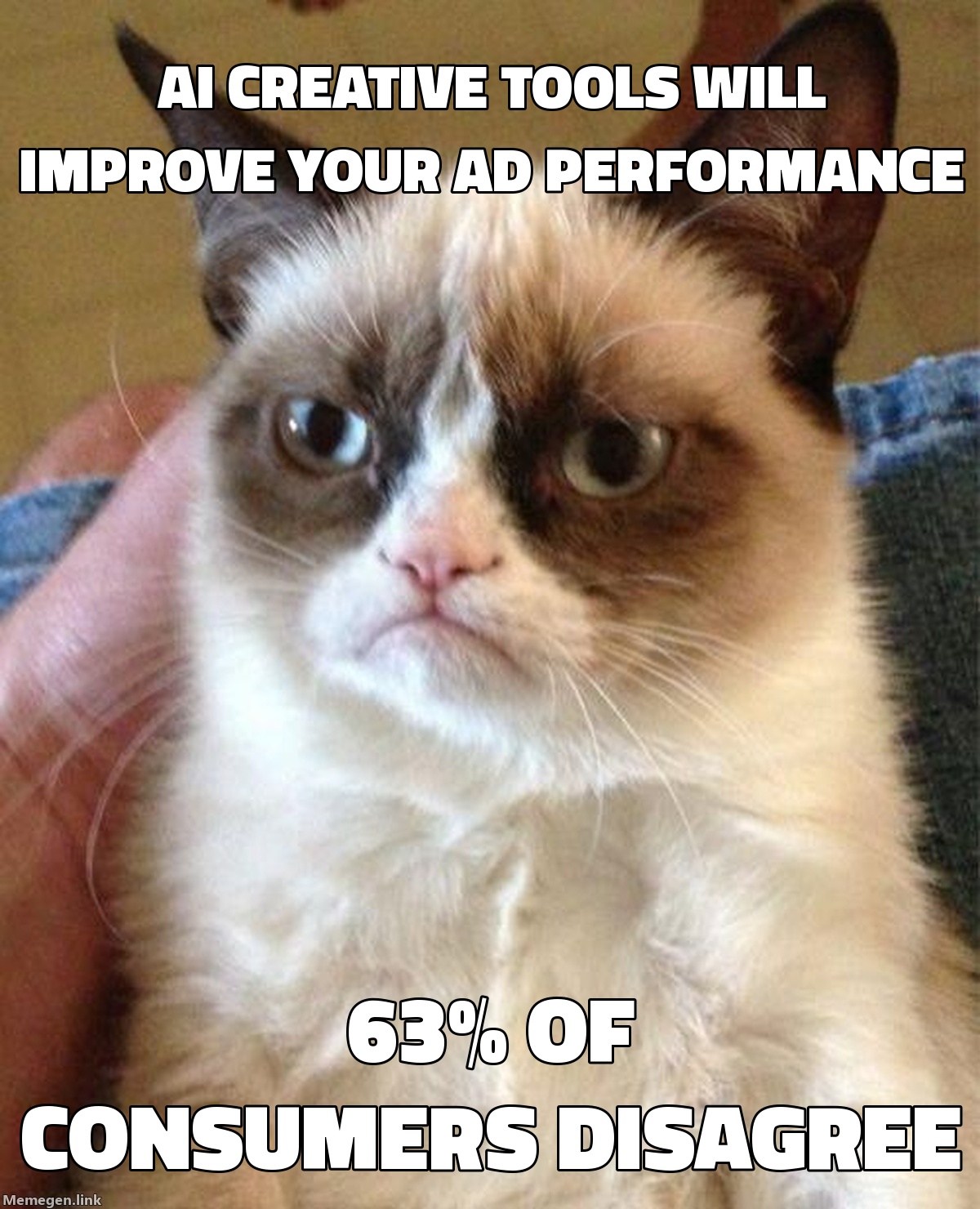
The headline findings: 78% of consumers find AI-generated ads less authentic. 73% say they are less likely to trust an ad they suspect was made by AI. 63% say they are less likely to buy from a brand they associate with AI-generated creative.
More than half — 54% — say they are tired of hearing about AI at all.
This is not fringe sentiment. These are majority positions across a global consumer sample. One in three respondents had already disengaged from a brand they saw as overly focused on AI. The panel presenting the research at Cannes was titled, bluntly: "I Never Asked for This: Advertising in the Age of Uninvited AI."
The timing could not be worse
Cannes 2026 was also the week Meta showed off AI avatar UGC video generation. Google had just launched Veo 3 in Asset Studio, turning product photos into video ads at scale. TikTok Symphony writes scripts and generates clips automatically. OpenAI announced its first European ad launch and told the audience that ChatGPT ad dismissals had dropped 50% since February.
Every major platform is actively selling you AI creative tools right now. The consistent pitch: efficiency, scale, personalization, lower production cost. The Harris Poll research introduces a variable none of the platform slides address — what the consumer does when they notice.
The mismatch between what platforms are building and what consumers say they want is real. That does not mean platform tools are wrong, but it does mean how you use them matters more than you might think.
What consumers are actually detecting
The research measured consumer response to perceived AI — not to AI creative they could reliably identify.
That distinction matters. Most consumers cannot accurately detect AI-generated creative. What they are responding to is the feel of it: language that could belong to any brand, product shots that look too clean, copy that says nothing specific about who they are or why a product fits them. Voices and faces that are slightly off.
That is not an AI problem. It is a quality problem that AI enables at scale.
The brands at risk are not those using AI in their workflow. They are brands using AI as a replacement for editorial judgment — letting the platform generate the asset and shipping it without a human making a call about whether it is any good.
The output is identical when the brief is thin and no one reviews what goes live.
The invisible account damage
Meta, Google, and TikTok are all building default-on automation that generates creative directly from your product catalog. Advantage+ Shopping creates ad assets from product images. Demand Gen extensions pull headlines from your website. TikTok Smart+ assembles creative automatically. These are not add-on features — they are increasingly the default path in automated campaign types.
And the results, measured in ROAS and CPA, can look fine. That is the problem.
Short-term conversion metrics do not capture brand trust erosion. A consumer who converts once but decides your brand feels cheap and automated does not show up in your platform reporting until they stop converting. That lag can stretch across quarters.
The 63% who say they are less likely to purchase from AI-creative brands are making that decision at a stage your dashboard does not measure. Platform attribution models are not built to surface this.
Four things to check this week
Pull your active Advantage+, Demand Gen, and Smart+ campaigns and look at what is actually running. If the platform has been generating assets automatically, you may not know what has gone live.
Ask someone outside your marketing team whether the creative looks AI-generated. Do not brief them first. Their unprompted reaction is the consumer's reaction.
Keep human judgment on the concept and the hook. Let AI handle variation volume, production speed, and iteration. The first three seconds and the core idea need someone who knows the audience — that is the piece that registers as authentic or not.
Run a controlled test. Human-produced creative versus AI-generated creative on the same audience, same budget, same flight window. Your own account data matters more than survey data about other people's brands.
The Harris Poll research is not an argument for removing AI from your production workflow. It is an argument for not outsourcing the creative decision to a platform that does not know your customers.
If you want a clear view of where your account stands — creative quality signals, structural gaps, wasted spend — the free audit runs in under three minutes and requires no login.
The platforms will keep building AI creative tools regardless of what consumers say. Whether you are the one making the editorial call is still up to you.
Sources: Marketing Brew, The Harris Poll / 4As / Infillion, Search Engine Land, Cannes Lions 2026, June 2026